A
A
A
San serif
Serif
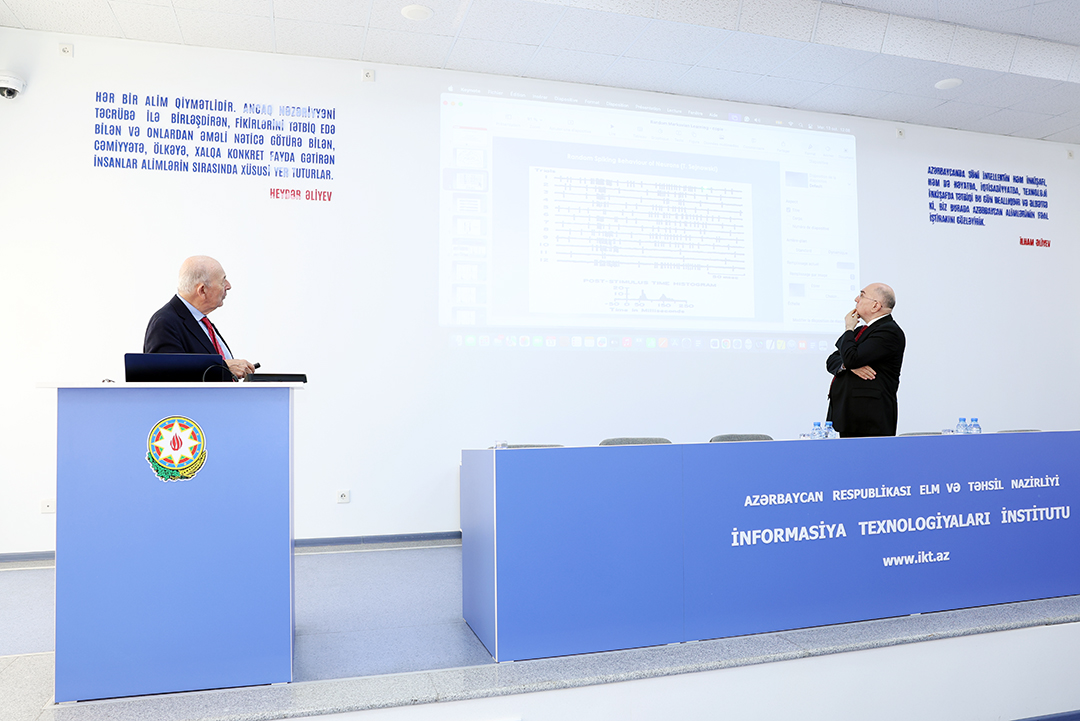
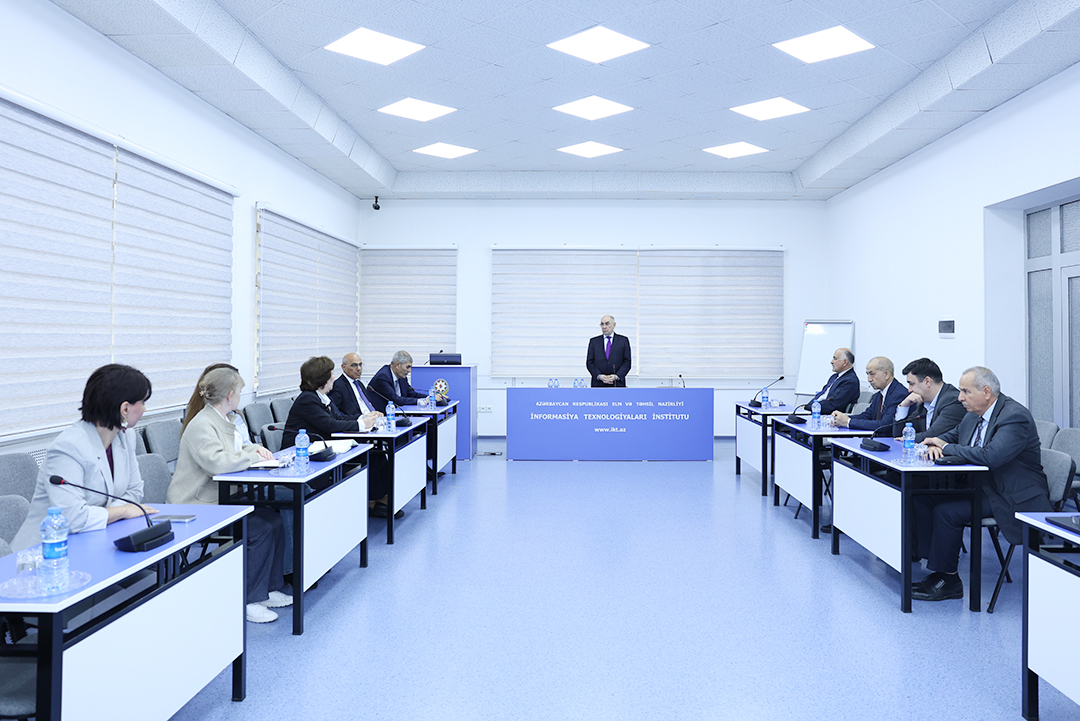
The Institute of Information Technology of the Ministry of Science and Education held discussions on “The role of acoustic forensics in securing evidence for offences."
Associate Professor Bikas Agayev, Doctor of Philosophy in Technology and head of the institute's department, presented a scientific paper co-authored with junior researcher Lala Aliyeva. He spoke about certain technological aspects of acoustic forensics, one of the key directions of digital forensics, as well as the legislative foundations relating to sound recording and noise. The researcher presented experimental studies conducted on forensic noise monitoring. Furthermore, he noted that acoustic noise poses serious risks to human health and that, for this reason, the standardization of noise levels occupies a special place in international practice.
Associate Professor Bikas Agayev noted that one of the primary subjects of research in acoustic forensics is the examination of digital audio, speech, and acoustic noise signals for the purpose of identifying and proving violations in administrative, civil, and criminal cases. He also addressed the principal methods employed in this field, such as auditory analysis, acoustic analysis, and linguistic analysis, as well as the regulatory and legal instruments currently in force in our country concerning noise-related issues. According to the head of the department, research conducted by the World Health Organization, the United States National Institute for Occupational Safety and Health, and other bodies indicates that acoustic noise pollution is considered the third leading factor adversely affecting human health, after atmospheric air pollution and water pollution. In this regard, the normative regulation of permissible noise level thresholds by means of statutory instruments holds a special place in international practice.
Then, Bikas Agayev drew attention to the fact that, within the framework of the research, architectural solutions for local and global acoustic monitoring systems have been proposed, taking into account the administrative and territorial division of our country and enabling the automation of the process of detecting noise norm violations for acoustic forensics purposes.
Academician Rasim Alguliyev, Vice-President of ANAS and Director General of the institute, emphasized that discussions dedicated to the problems of acoustic forensics are of particular relevance within the framework of the “Year of Urban Planning and Architecture.” Taking into account contemporary challenges, the scholar noted the importance of examining the capabilities and risks posed by deepfake technologies in the context of acoustic forensics.
The Vice-President of ANAS noted that research on acoustic noise technologies, including speech recognition technologies in biometric identification systems, had previously been conducted at the institute and that certain scientific results had been achieved in this field.
Touching upon the institutional problems of the digital state, Academician Rasim Alguliyev stated that compliance with acoustic norms and requirements is one of the pillars of this complex critical infrastructure. In this regard, it is necessary to expand research in the areas of managing, balancing, and reducing the acoustic noise of audio sources, to study international experience in this field, and to identify existing problems. The scholar also emphasized the importance of establishing a national acoustic monitoring system in the country and noted the significance of utilizing the capabilities of civil society in collecting publicly relevant audio data generated at various locations and facilities throughout this process.