A
A
A
San serif
Serif

During the periods of Great Leader Heydar Aliyev's leadership in Azerbaijan, extensive work was carried out under his initiative and care to ensure the dynamic and harmonious development of the republic across all sectors. The emergence and establishment of information and communication technologies (ICT) was one of the strategically significant directions of the implemented technological policy.
National Leader Heydar Aliyev devoted immense attention to the application and advancement of multi-purpose cutting-edge technologies across all sectors of the economy, implementing a consistent and systematic policy. Neither prior to the era of Great Leader nor during the period leading up to his return to power had any leader placed such emphasis on innovative and advanced technologies or prioritized them at the level of state policy. As a direct result of the technological policy he initiated during his first leadership period and continuously pursued—a policy that played a pivotal role in the republic’s sustainable development—Azerbaijan, which had previously lagged in all socio-economic indicators, progressed within a short time to a new stage of development: an industrial society. Within the framework of this policy, deliberate, consistent, and systematic measures were implemented toward the application of innovative technologies and knowledge in oil, gas, chemistry, mechanical engineering, agriculture, and other sectors forming the backbone of the republic's economy, as well as the creation of necessary infrastructure and the formation of a technological culture within society. During that period, the establishment of numerous new plants and factories, the creation of production and service areas for various purposes, the wide-scale application of mechanization and electrification in the agrarian sector, and the rapid development of the construction field and transport infrastructure radically transformed the appearance of our cities and villages, significantly modernizing them. At the same time, one of the fields receiving great attention was ensuring the continuous refinement and development of radio and television broadcasting, as well as communication technologies, which served the formation of the national information space.
The execution of such arduous and complex tasks, alongside strategic objectives such as accelerating socio-economic development and improving public welfare, placed highly demanding responsibilities on the fields of science and education. As a result of the successful technological policy implemented in the republic during that period, products manufactured in plants, factories, agricultural enterprises, and processing facilities began to be presented to consumers in both domestic and foreign markets. In general, to ensure the sustainable technological development of the republic, the Great Leader provided immense support for business cooperation with leading companies, production associations, and scientific-technological and innovation centers operating both within the Union and abroad. To facilitate the transfer of new technologies, advanced practices, and knowledge serving strategic goals to Azerbaijan, international symposiums and congresses were continuously organized, and measures were implemented for the training of highly skilled engineering personnel and technologists. Furthermore, the export of various technological products manufactured in our republic served to enhance Azerbaijan's international image and prestige as an indicator of our people's scientific-technological potential, knowledge, and skills.
One of the fundamental sources playing a crucial role in the numerous successes and achievements gained today in the application of high technologies in our country is the technological policy implemented by the Great Leader with profound foresight during those periods. A primary priority of the technological policy carried out by Heydar Aliyev was the formation of the ICT industry and infrastructure in Azerbaijan. Starting from the 1970s, a large number of plants, scientific-production associations, special design bureaus, and innovation and technology transfer centers were established on a large scale and at a rapid pace to produce diverse products in fields such as electrical engineering, radio electronics, instrument engineering, telecommunications, computing machinery, and microelectronics, which form the foundation of the ICT industry in Azerbaijan. Although these manufactured products—including information-measurement devices, automatic monitoring and control systems, special computing units, and others—served civilian purposes, they were most often produced based on the orders of the Soviet military-industrial complex.
Numerous production enterprises established during that period, such as the Radio Plant and the Electronic Computing Machines Plant, continue to operate today after being technologically modernized, providing significant support to the development of the country's ICT industry. Branches and production facilities of these plants and associations were opened in various regions—including Nakhchivan, Ganja, and other cities—creating extensive opportunities to ensure the employment of the local population. Specialized plants and technological platforms with substantial capacity for the development of microelectronics, as well as the design and production of various types of integrated circuits (chips), were established (such as AZON, the Institute of Microelectronics, the Satellite Plant, etc.). Their products were primarily exported to foreign countries. Additionally, the telephone, telegraph, and postal infrastructure and services, which were integral components of Azerbaijan's ICT industry, were significantly refined and developed.
One of the defining characteristics of that period was the establishment of information-computing centers within the republic's central administrative and executive bodies, as well as its large associations and complexes. The primary task of these centers was to develop and operate databases, automated management systems, and information processing systems based on paper-based data regarding the activities of their respective organizations. Since personal computers were not yet manufactured globally at that time, all operations were carried out using large-scale universal computing machines. As a result of the comprehensive measures and consistent technological policy implemented in the republic regarding the formation of the ICT industry, new specialties—such as computer and electronics engineers, programmers, system administrators, designers, and technologists—began to emerge in Azerbaijan's labor market. In other words, within the limited scientific-technological possibilities of that era, a national workforce potential possessing high-level knowledge and skills in the ICT industry was formed. Following the collapse of the Soviet Union, this cadre of specialists has honorably continued their activities in various spheres in accordance with the interests of independent Azerbaijan, making worthy contributions to the country's digital development.
One of the primary priorities of the technological policy implemented in the republic under the leadership of the Great Leader was, along with other sectors, to form a more robust and highly qualified cadre of specialists for the ICT industry. To this end, the necessary material and technical base for ICT was established in relevant higher and secondary specialized educational institutions across most cities and regions; laboratories and computing centers were opened, and students were sent to corresponding plants and production associations of the Soviet republics during their studies. At the same time, educational materials published in foreign languages were regularly translated into Azerbaijani, and new textbooks were prepared. Another factor serving to enhance the quality of the personnel trained in this direction was that the educational process and specialist training were carried out by utilizing the facilities of the republic's relevant plants and production complexes. This provided the necessary opportunities and conditions for future engineering and technical workers to develop practical skills and competencies alongside their theoretical knowledge.
In addition to all these comprehensive efforts, one of the primary targets of the strategic policy implemented with great foresight under the initiative and direct care of the National Leader was to secure the support of the Soviet Union’s leadership and obtain opportunities for Azerbaijani youth to study at leading higher education institutions in other republics. At that time, the main challenge was the lack of access to universities outside the republic for young people from rural areas and villages who had graduated from secondary schools with high marks but lacked the necessary proficiency in the Russian language. Once these educational challenges were resolved through the Great Leader's care, approximately 14,000 Azerbaijani youths acquired high-quality knowledge at those universities and institutes, returned home, and operated successfully in various fields. These graduates received special attention at the level of the republic’s leadership, being provided with housing and employment, along with every support to secure a deserving position in society. Subsequently, this cadre potential provided immense support to the country's development by operating effectively in state administration, various sectors of the economy, science, and education. As a result of the continuous and systematic implementation of this wise and visionary policy, the specializations of the students studying abroad were primarily focused not on professions related to the ideology of that era, but specifically on exact sciences and ICT profiles.
The Great Leader provided immense support for the development of new fields of knowledge across all scientific disciplines in Azerbaijan. Within the framework of this policy, one of the areas he prioritized was the conduct of theoretical and practical research in ICT-profiled subjects, such as applied mathematics, cybernetics, informatics, telecommunications, automation, and others. On one hand, new scientific institutions and laboratories were established in these fields; on the other, young scientists and researchers were trained both within the republic and at the leading scientific and educational centers of the Soviet Union. The primary priorities of the research conducted during that period, alongside fundamental investigations within these disciplines, consisted of automating processes across all sectors of the republic's industry—primarily in oil and gas, chemistry, agriculture, and the socio-economic sphere—as well as the widespread application of computer technologies and enhancing the efficiency of management and services. These studies were mainly carried out at the institutes of the Azerbaijan Academy of Sciences and higher education institutions, as well as in special design bureaus and technology transfer centers, which functioned as innovative bridges between science and production, serving the rapid practical implementation of scientific results.
Another established tradition was that scientists working in scientific institutions also actively participated in the training of young personnel within higher education institutions. These integrative ties between science and education not only contributed to the development of skilled professionals for the national ICT industry but also enabled exceptionally talented young people to enter research institutions or be sent to prestigious research centers across other Soviet republics. As a result of this policy, within the realities and constraints of that era, a synergy between science, education, and production, along with professional cooperation relations, was formed for the establishment and development of the ICT industry in our republic.
One of the innovations for Azerbaijan was the commencement of research in the space sector. The foundation of this initiative was laid by the Great Leader in 1973 during the hosting of the International Astronautical Federation Congress in Baku. Within a short period, specialized research centers for space problems, scientific-production associations, and design bureaus were established in the republic. One of the primary pillars of the space industry—which today serves the state’s strategic interests under the leadership of President Ilham Aliyev—is precisely the visionary and wise policy implemented during that era.
Over these years, numerous scientists were trained in various scientific fields of ICT within the republic, close cooperation relations were established with the world's leading research centers, and international conferences and symposiums were held on pressing issues. Most importantly, scientific schools were formed across various ICT disciplines, and their activities, traditions, and succession continue to this day.
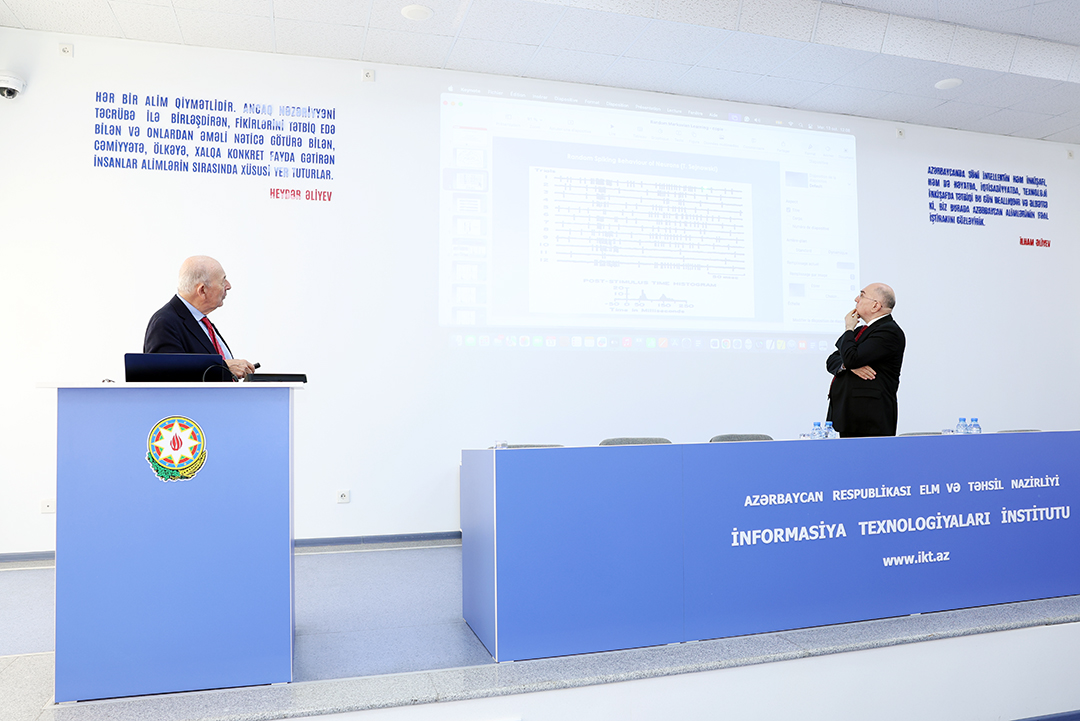
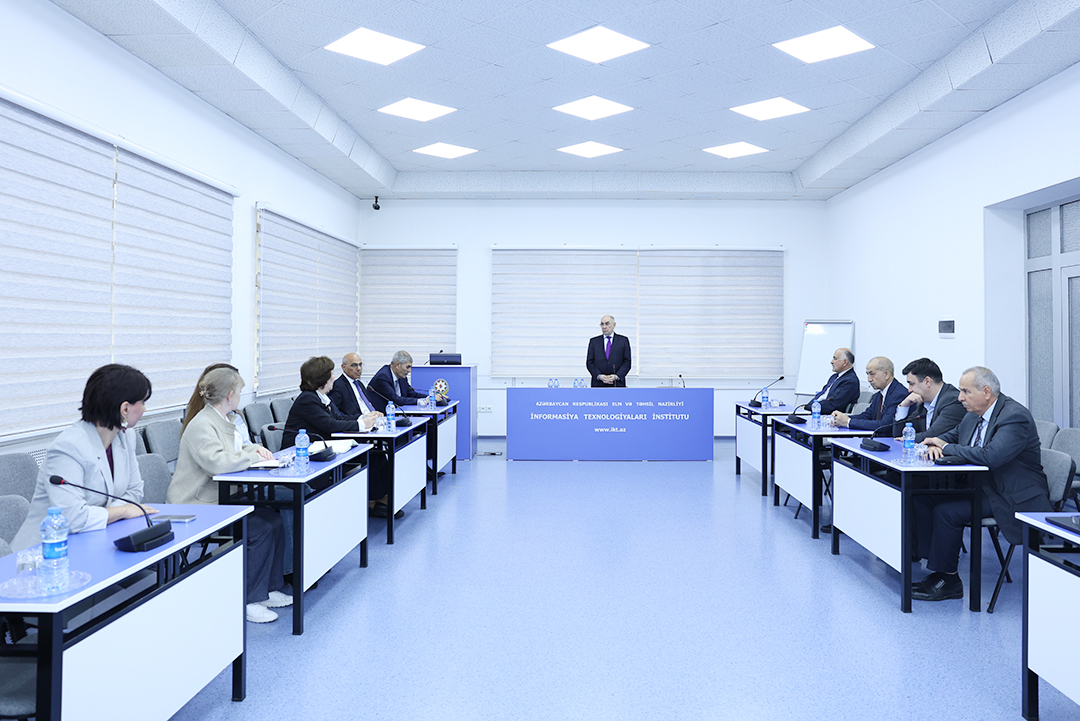
One of the scientific entities established under the initiative of the Great Leader, which has continuously evolved under his care and provided intellectual support to Azerbaijan's ICT industry, is the Institute of Information Technology of the Ministry of Science and Education. The founding core of the institute was the Department of Automated Management Systems, established in 1971 by the decision of the Great Leader within the Institute of Cybernetics of the Azerbaijan Academy of Sciences. The primary objective in organizing this entity was to support the design and implementation of various levels and types of automated management and information processing systems that were intended for creation through the application of mathematical methods, computational techniques, and computer technologies within state authorities, ministries, committees, socio-economic sectors, and production associations. Furthermore, it aimed to provide scientific-methodological support for the formation of the 'Azerbaijan' Republic Automated Management System, which was an integral part of the Soviet Union's corresponding infrastructure at that time, as well as to carry out inter-agency coordination, conduct knowledge-intensive applied-innovative research, and train highly qualified national personnel. In modern terms, the primary task set by the Great Leader for this scientific institution was the establishment of a digital state in Azerbaijan within the framework of the technological capabilities and socio-political constraints of that era. As a result of these activities, the foundation for the creation of network technologies, information systems for various purposes, and data-computing centers was laid, and highly skilled ICT specialists were trained.
During that period, the scientists and specialists of this research institution achieved the creation of the republic's first experimental network infrastructure by ensuring the interconnection of universal electronic computing machines belonging to various organizations, as well as their links with corresponding systems in other Soviet republics via telephone lines. As a result of the experience, knowledge, and skills acquired over these years, our country's connection to the international internet network was realized in the early 1990s. Subsequently, in 1997, the Information-Telecommunication Center was established on the basis of the Department of Automated Management Systems.
In the subsequent period, with the aim of ensuring the resolution of knowledge-intensive strategic problems facing independent Azerbaijan, tasks of vital importance were set for this center, and its future activities and priority directions were defined. Starting from the late 1990s, taking into account such essential and pressing matters as the global expansion of internet technologies, the rapid penetration of ICT into various spheres of social life, the emergence of new digital realities and numerous scientific challenges in this direction, and the need for training scientific personnel, the Great Leader made a decision in 2002 to establish the Institute of Information Technology on the basis of the aforementioned center. Since that time, under the conditions of new global challenges and opportunities, the institute has been conducting research on the scientific-theoretical and practical problems of forming a digital state and ensuring its cybersecurity. Furthermore, it actively participates in the execution of tasks arising from state programs and strategies adopted in this field, supports the integration of science and education, trains young scientists, and represents the country in international projects.
It is well known that at the time of the Great Leader's return to power, Azerbaijan, which had recently restored its independence, was embroiled in a deep socio-political and economic crisis. War was raging within the country, and our lands were being occupied. A significant portion of the population had become refugees, and the threat of civil war loomed over society. In the literal sense of the word, Azerbaijan faced the risk of losing its independence and statehood. In such a chaotic environment, almost everything previously established in the country had been decimated. In this situation, the once-active ICT industry and infrastructure, as well as the telecommunications systems linked to the former Soviet Union, had sustained immense damage. The ICT systems and facilities in operation did not meet the requirements of the modern era, as they had undergone both moral and physical obsolescence. Due to the lack of such technological capabilities, independent Azerbaijan fell into an information and communication blockade, making it impossible to bring the truths of the nation to the attention of the global community. Although certain initiatives were proposed to resolve these existing problems, it was impossible to realize them due to the lack of necessary funds in the state budget.
As a result of the comprehensive activities implemented by the Great Leader, achieving a ceasefire with the enemy, ensuring internal stability and national solidarity, attracting foreign investors to revive the republic's economy, formulating an oil strategy serving the interests of the Azerbaijani people, and signing the 'Contract of the Century' with the world's leading oil and gas companies created a foundation for the reconstruction of the ICT industry and infrastructure, alongside other vital sectors. Starting from the mid-1990s, the communication, postal, and television and radio broadcasting systems and infrastructure in our country began to undergo fundamental reconstruction through the application of modern technologies; with the support of the world's leading companies, the provision of high-quality stationary and mobile telecommunication services to citizens was achieved. Simultaneously, necessary measures were implemented to restore and improve the activities of the factories and production areas that previously formed the backbone of the ICT industry.
As a result of the technological policy and reforms conducted in the country's telecommunications sector, significant attention was devoted to the creation and development of the national internet network infrastructure. In accordance with the requirements of the new socio-economic policy, the business sector of the ICT industry began to take shape, leading to the emergence of numerous national companies and innovation centers. Simultaneously, relevant scientific research and higher education institutions were engaged in the training of personnel in the field of ICT and the resolution of knowledge-intensive strategic problems serving national interests, with the state providing immense support for their activities. Under such complex circumstances, as a result of the policy implemented under the leadership of the Great Leader, a significant resurgence from technological decline toward development began to be observed, alongside other directions.
At the meeting of the UN General Assembly in 2000, a special declaration was adopted recognizing the information society—the new stage in the development of civilization—as the ideology of the millennium.
Based on the ideas put forward in this declaration, as well as the digital realities and opportunities emerging within the country’s ICT sector, the Great Leader made a historic decision in 2002 to develop a state strategy supporting computerization, networking, and digitalization across all spheres of society, including the state and business sectors. This laid the foundation for a state policy aimed at building a post-industrial society—in other words, an information society—as the next developmental phase of Azerbaijan’s industrial society.
Finally, in 2003, the "National Strategy on Information and Communication Technologies for the Development of the Republic of Azerbaijan (2003-2012)," which defined the formation and development of the information society in the country as a primary target, was adopted by the National Leader Heydar Aliyev. Over the following period, great achievements have been made in this field, a robust digital platform serving the interests of both the state and citizens has been established, and Azerbaijani space satellites have been launched into orbit around the Earth. Taking these technological achievements into account, in February of this year, under the initiative and leadership of President Ilham Aliyev, the formation of a cyber-sovereign state was launched in the context of global technological challenges and risks. This initiative, which addresses the interests of an independent and sovereign Azerbaijan and considers new digital architectural requirements, entails the application of artificial intelligence and other advanced technologies, and has outlined specific tasks for relevant institutions and scientists.
As a scientist and expert, I have witnessed and, in some instances, directly participated in all these processes and implemented initiatives for over fifty years. Over time, as I observed the turbulent and bloody events unfolding internationally, I have come to realize even more deeply the invaluable contributions of National Leader Heydar Aliyev. As a magnificent, visionary, and wise socio-political figure, his unparalleled services have been instrumental in shaping the destiny of our people, as well as in preserving and developing the independent State of Azerbaijan.
Academician Rasim Alguliyev,
Vice-President of the Azerbaijan National Academy of Sciences (ANAS) and Director General of the Institute of Information Technology of the Ministry of Science and Education