A
A
A
San serif
Serif

In the modern era, cyber-physical systems have become one of the core technological platforms across industry, energy, healthcare, and other critical sectors. A significant portion of the massive data continuously generated by sensors and control devices is stored and processed in cloud environments. The rapid growth in data volume necessitates the development of new approaches for its efficient processing within cloud resources.
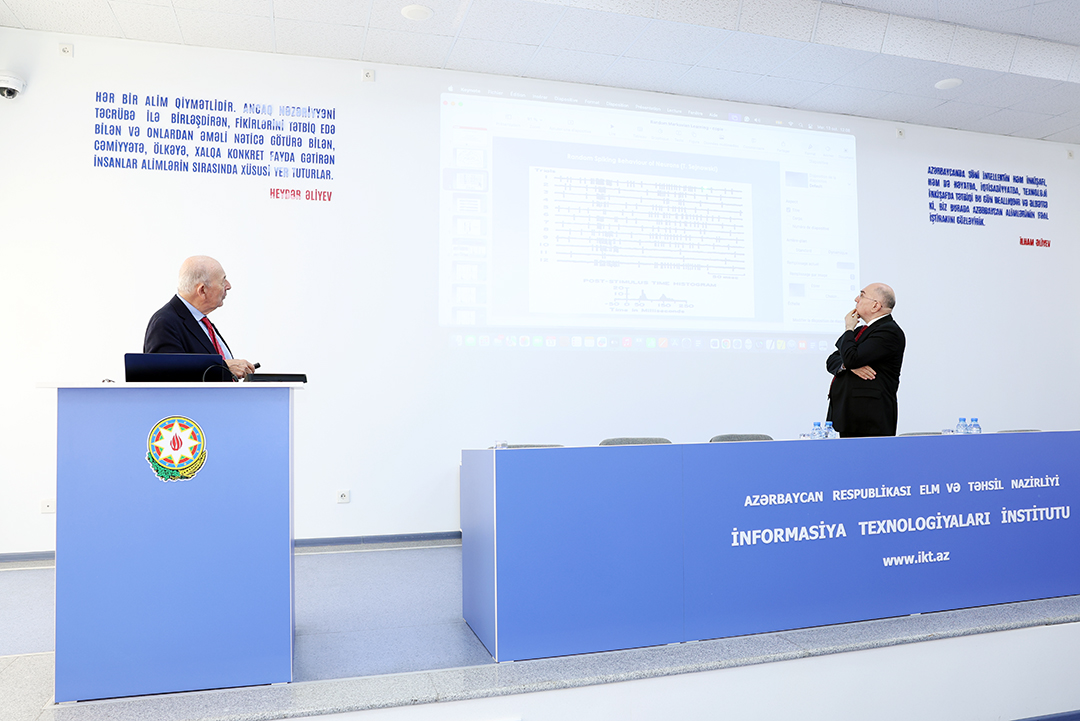
Doctoral student Mammad Hamidov made these remarks during a scientific seminar at the Institute of Information Technology of the Ministry of Science and Education.
Delivering a presentation titled "Efficient Processing of Data Generated in Cyber-Physical Systems in the Cloud Environment: Current Approaches, Challenges, and Prospects," he emphasized that the efficient processing, storage, and secure management of massive data generated by these systems is one of the most pressing research areas in modern information technology. According to the researcher, cyber-physical systems unlock broad opportunities for optimizing complex processes by enabling real-time monitoring, analysis, and control across various fields.
Hamidov noted that the objective of the study is to analyze existing approaches to the efficient processing of data generated by cyber-physical systems in the cloud, identify current challenges in this domain, and evaluate prospects.
The speaker outlined the key technologies and methods used to process data generated by cyber-physical systems, highlighting the main challenges encountered. He provided an in-depth breakdown of cyber-physical systems' hierarchical, five-layered, distributed, service-oriented, and cloud-based architectures and compared them.
The cloud-based approach proposed in this research enables centralized, scalable, and efficient processing of massive data generated in transportation systems,” Hamidov emphasized. The researcher also discussed international practices in this field, as well as relevant global scientific conferences.
Concluding his presentation, the speaker touched upon future development directions, emphasizing plans to further integrate artificial intelligence, machine learning, Edge, Fog, and cloud technologies. He also pointed out the progress in federated learning methods, improved real-time processing abilities with 5G/6G networks, and the wider use of smart resource management systems.
The presentation was followed by an extensive discussion, during which the speaker answered questions from the attendees.
Speaking at the seminar, Vice-President of ANAS and Director General of the Institute of Information Technology of the Ministry of Science and Education, Academician Rasim Alguliyev, noted that since cyber-physical systems have limited capacity for long-term data storage and processing, leveraging cloud technologies is essential to store, process, protect, and ensure Emphasizing the importance of extensively researching both the scientific and practical aspects of cloud systems, Academician Rasim Alguliyev noted that efficient big data processing significantly enhances management quality, helps identify system vulnerabilities on time, and supports more informed decision-making. The scientist also pointed out that processing data generated by cyber-physical systems in the cloud brings cybersecurity issues to the forefront. accessibility and efficiently manages the critical data generated by these systems.
© All rights reserved. When using these materials, reference to www.iсt.az is required.