A
A
A
San serif
Serif

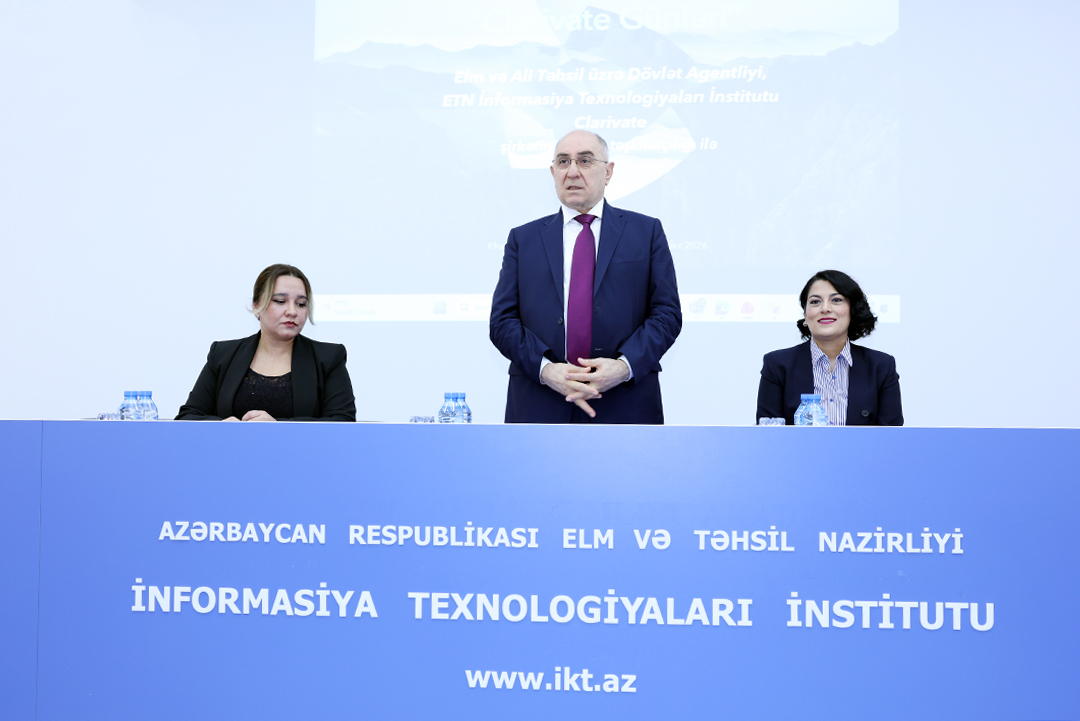
At the next scientific seminar held at the Institute of Information Technology of the Ministry of Science and Education, the institute’s employee Nargiz Abdullayeva delivered a presentation on “The Impact of Artificial Intelligence on Publication Ethics.” The speaker noted that publication ethics, one of the main pillars of scientific activity, is facing new challenges in the modern era under the influence of artificial intelligence (AI) technologies.
She stated that publication ethics is a set of fundamental principles that ensure researchers’ honesty, the protection of authorship rights, avoidance of plagiarism, and the integrity of scientific data. Noting that trust in the scientific community is built precisely on these principles, the speaker added that the rapid spread of AI tools can both strengthen and undermine this trust mechanism.
N. Abdullayeva discussed the use of artificial intelligence in writing scientific papers, preparing summaries, and editing language and style, as well as in the peer-review process. She noted that uncontrolled and undisclosed use of artificial intelligence creates serious ethical issues concerning authorship rights. According to the presenter, under international publication ethics rules, AI cannot be recognized as an author.
The speaker emphasized the importance of transparency in the use of artificial intelligence, stating that if these tools are used in the preparation of a scientific work, this fact must be explicitly disclosed. She drew the seminar participants’ attention to the fact that many reputable international scientific journals already require an “AI disclosure” statement regarding the use of artificial intelligence.
The researcher also assessed AI “hallucinations” as a serious risk. It was noted that, in some cases, AI cites nonexistent sources, generates fake DOI numbers, and produces scientifically incorrect but seemingly convincing texts. This poses a direct threat to the reliability of scientific information.
She also spoke about language model–based methods for detecting AI-generated texts, including N-gram analysis, stylometric, and semantic analysis techniques. The presenter emphasized that, while traditional plagiarism detection systems can identify textual similarity, the appropriation of ideas and concepts generated by artificial intelligence occurs in more complex and subtle forms.
N. Abdullayeva summarized both the positive and negative impacts of artificial intelligence on publication ethics, noting that while these technologies can facilitate researchers’ work, they should be used only as auxiliary tools, and the main scientific results must be generated by humans. At the end of the presentation, the speaker shared insightful quotes on science and diligence.
Following the presentation, discussions were held, and questions were addressed.
Academician Rasim Alguliyev, Vice-President of ANAS and Director General of the institute, presented a number of suggestions and recommendations regarding the presentation. He emphasized the importance of systematically studying the impact of artificial intelligence technologies on the scientific publishing environment. The academician also highlighted the significance of educating researchers on the proper use of artificial intelligence tools.
© All rights reserved. Citing www.iсt.az is necessary when using news.