A
A
A
San serif
Serif
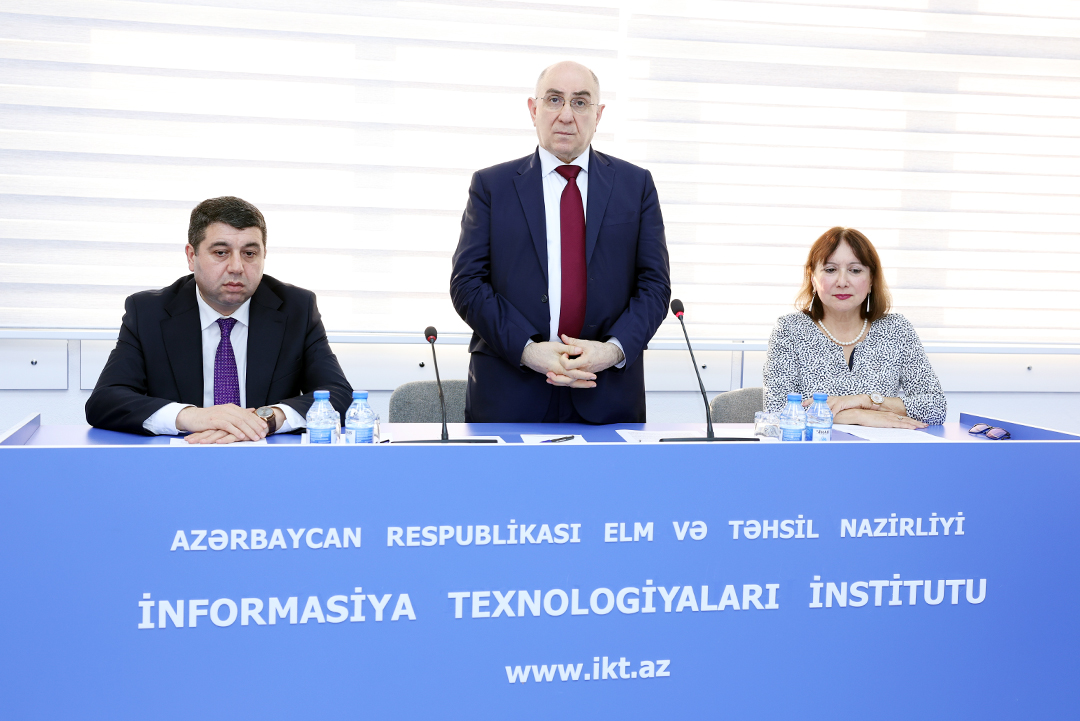
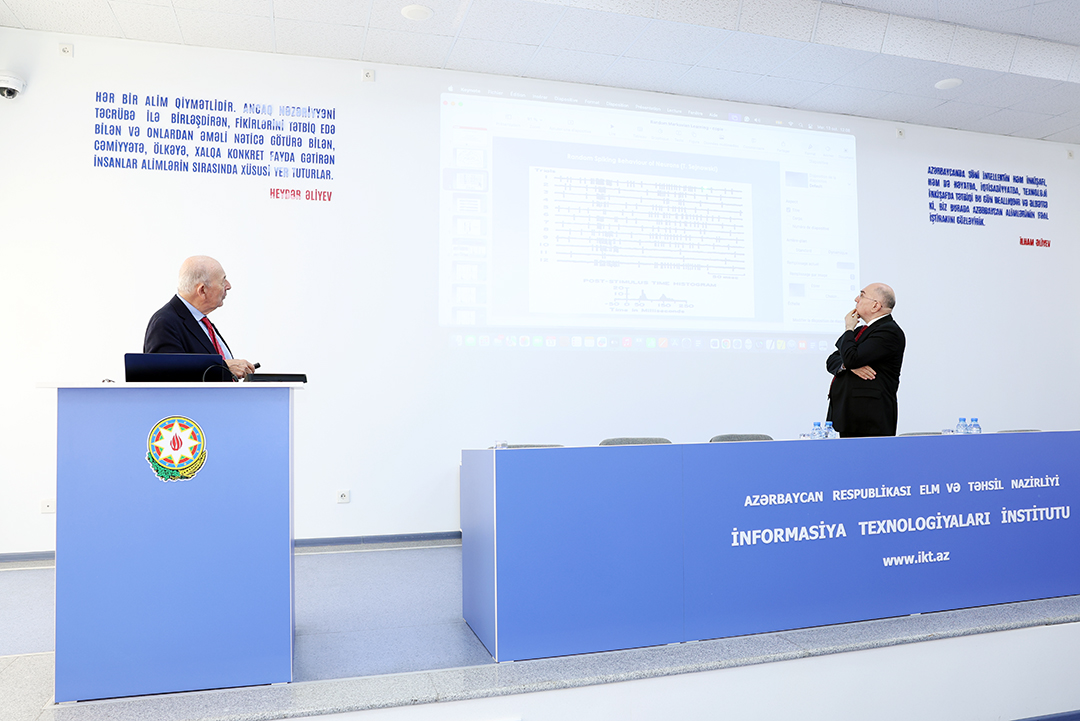
The Institute of Information Technology of the Ministry of Science and Education organized a scientific seminar on "Quantum technologies: current state, problems, and prospects."
AZERTAC reports that Mammad Hashimov, PhD in Technical Sciences and the institute's leading researcher, spoke in his presentation about the history of quantum technologies, existing approaches, and prospects. He stated that the rapid development of fields such as artificial intelligence, big data, and the Internet of Things has significantly increased the demand for computing power, with classical computers facing limitations in complex optimization, modeling, and cryptographic problems. For this reason, quantum technologies based on the laws of quantum mechanics are recognized as a strategic competitive field of the 21st century and one of the most promising directions for the future.
Reviewing the history of quantum theory, the speaker emphasized that the field was formed in the early 20th century through the discoveries of scientists such as Max Planck, Albert Einstein, Niels Bohr, and Werner Heisenberg, adding that these scientific foundations paved the way for modern technologies like quantum computers, quantum communication, and quantum sensors in subsequent decades. He also explained the core principles and operating mechanisms of quantum technologies, as well as the architecture of quantum systems.
Providing information on current quantum computing systems, the researcher noted that companies such as IBM, Google, IonQ, Rigetti, and D-Wave are already developing quantum processors with hundreds and, in some cases, thousands of qubits, offering remote access to these resources via cloud platforms. At the same time, it was emphasized that quantum computers are not intended to replace classical computers, but specifically to solve specialized problems such as factorization, molecular modeling, and complex optimization more efficiently.
Mammad Hashimov pointed out that leading countries, including the US, China, the European Union, Japan, Canada, the UK, and Russia, are striving to achieve quantum supremacy through national programs and large-scale investments. He also noted that the awarding of the Nobel Prizes in Physics in 2022 and 2025 for research in quantum entanglement and superconducting quantum circuits further confirms the scientific significance of this field.
During his presentation, the speaker also touched upon the new challenges posed by quantum technologies to cybersecurity, emphasizing the crucial role that quantum technologies play in protecting state cyber sovereignty and critical infrastructure.
Speaking at the event, Academician Rasim Alguliyev, Vice-President of ANAS and Director General of the institute, noted that the topic is particularly relevant amid modern scientific and technological challenges. According to the scientist, today quantum technologies are becoming one of the crucial directions at the center of world science's attention, defining the trajectory of future technological development.
Academician Rasim Alguliyev highlighted that quantum informatics is one of the promising research areas prioritized by the institute. He stated that scientists and specialists face important tasks regarding the continuation and deepening of research in quantum informatics and quantum software engineering in the future, as well as the training of highly qualified personnel in this field, and offered his suggestions and recommendations in this direction.