A
A
A
San serif
Serif

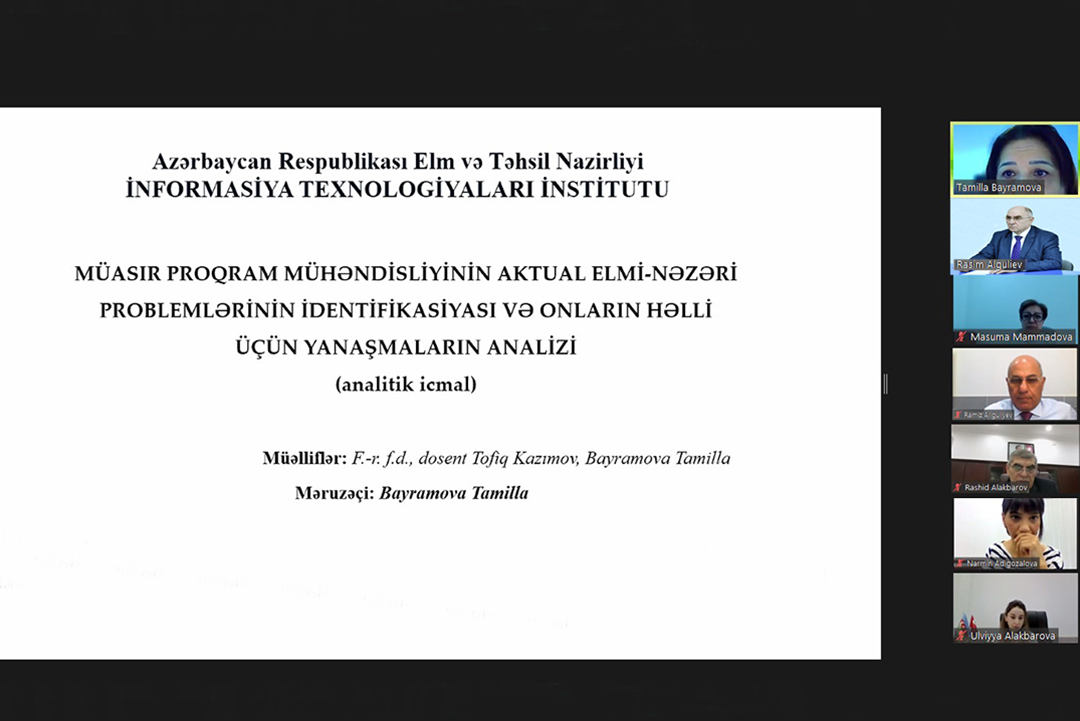
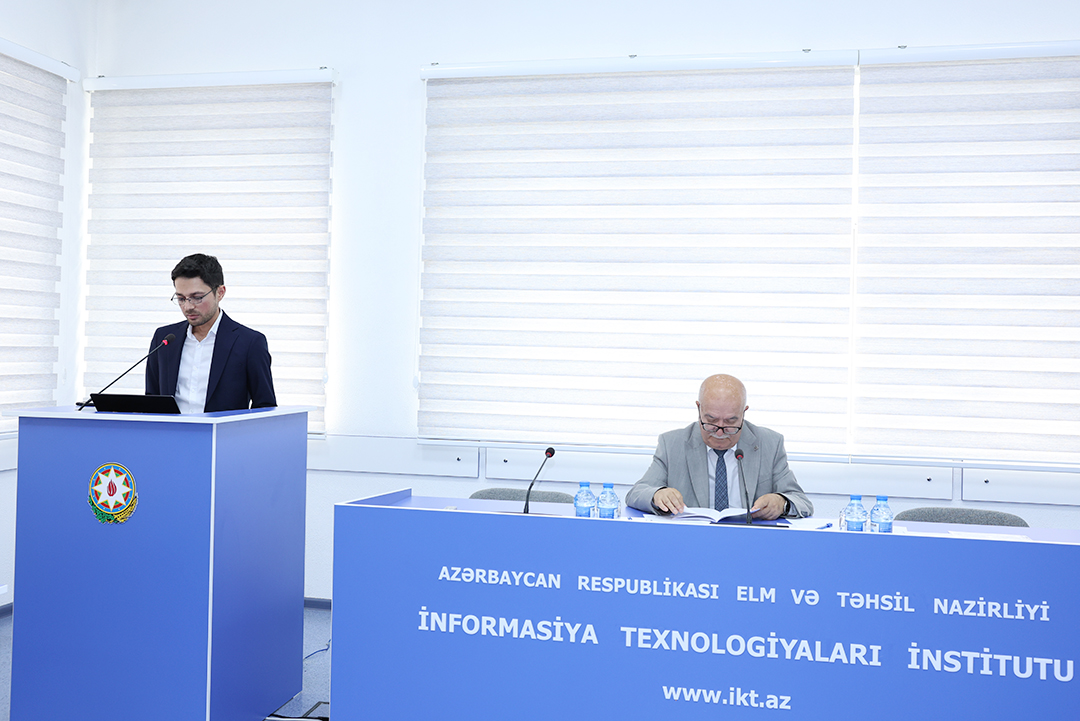
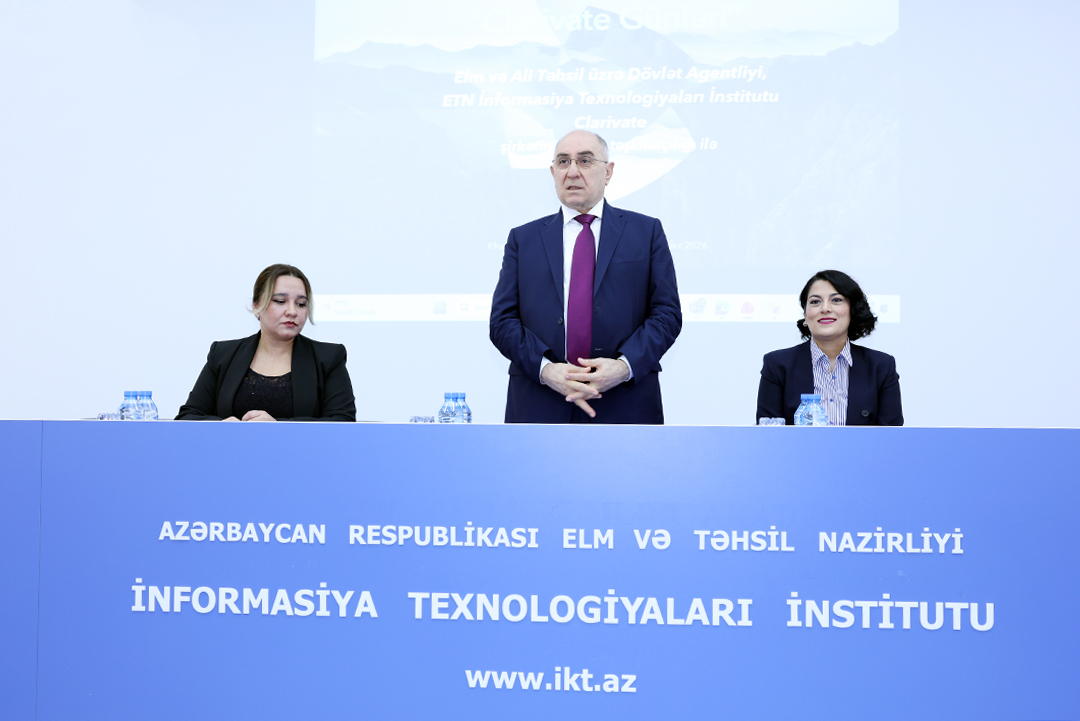
A scientific seminar dedicated to the topic “Identification of Current Scientific and Theoretical Problems of Modern Software Engineering and Analysis of Approaches to Their Solution” was held at the Institute of Information Technology of the Ministry of Science and Education.
Tamilla Bayramova presented the report co-authored by Associate Professor Tofig Kazimov, Head of the Institute’s Department, and the PhD in Physics and Mathematics, together with the Institute’s Chief Specialist, Tamilla Bayramova. She provided detailed information on the current stages of development of software engineering, global trends, newly emerging scientific approaches in this field, and the main challenges involved.
T. Bayramova emphasized that software engineering is of strategic importance to the global economy and national security systems. She noted that the rapid development of digital technologies, particularly the software industry, has made this field one of the main driving forces of the country’s economy. She also highlighted that software engineering is already being referred to by a number of analysts as the “new oil,” due to the high added value it generates and its significant economic impact.
The speaker, based on an analysis of scientific research conducted over the past 40 years in software engineering, commented on the evolutionary stages of the field. She noted that software engineering, having evolved from the era of programming and passed through the stage of software development, has now entered the stage of optimization. At the current stage, the primary objective is to enhance the efficiency of existing software systems, integrate them with artificial intelligence technologies, and adapt them to human-centered requirements.
Discussing the impact of artificial intelligence on software engineering, T. Bayramova noted that the application of AI methods has given rise to a new field known as probabilistic software engineering. “In this approach, the behavior of software systems is based on statistical and probabilistic models,” she explained. She emphasized that AI technologies are actively applied at all stages, including programming, testing and quality assurance, design, requirements management, technical support, and project management.
The researcher also presented the main trends emerging in the field of software engineering. These include AI-assisted software engineering, search-based software engineering, the “Continuous Everything” paradigm, socio-technical software engineering, explainable and trustworthy AI systems, ethical engineering, and green software engineering. At the same time, the increasing role of quantum software engineering and immersive technologies in software development was highlighted.
The seminar also covered international practices in software engineering, including conferences organized by prestigious organizations such as IEEE and ACM, as well as educational approaches based on ISO/IEC standards. It was emphasized that the knowledge areas defined in the SWEBOK Guide play a key role in training specialists in this field. T. Bayramova also provided information on the development of software engineering in Azerbaijan, noting that its designation as one of the national priorities in the Strategy of the Republic of Azerbaijan on Information Security and Cybersecurity for 2023–2027, signed by President Ilham Aliyev, demonstrates the state-level importance attached to this field.
T. Bayramova emphasized that comprehensive analyses indicate that software engineering is no longer solely a technological field but has evolved into a socio-technical system built on the interaction of technology, processes, and the human factor. She noted that the results of the research hold significant scientific value for improving software engineering educational programs and determining the future development directions of the field.
Then, Associate Professor T. Kazimov spoke, noting that scientific research in software engineering was first launched in Azerbaijan in 2003 at the Institute of Information Technologies under the leadership of Academician Rasim Alguliyev, Vice-President of ANAS and Director of the Institute. He emphasized that consistent scientific activity has since been carried out in this field. He added that the books Software Engineering and Fundamentals of Software Engineering were published by the Institute’s publishing house in 2013 and 2020, respectively, and that in 2017, the Institute organized the first national conference titled Current Scientific and Practical Problems of Software Engineering.
Following the presentation, discussions were held, and questions were answered.
Academician Rasim Alguliyev, speaking on the topic, emphasized that researching advanced studies in software engineering worldwide, transferring them to Azerbaijan, and adapting them to the country’s scientific and educational environment are of great importance. He highlighted the significance of expanding cooperation with leading countries in the field of software engineering. He added that the institute should adopt a proactive approach in this direction, prepare thoroughly for scientific conferences on software engineering, and draw the attention of relevant scientific institutions, universities, and government bodies to this matter.
During his speech, the Director General of the Institute put forward several important proposals, taking into account the strategic role of software engineering in the country’s digital development and the assurance of its cyber sovereignty. Academician Rasim Alguliyev stated that, first and foremost, the current state of software engineering and its pressing scientific issues should be analyzed comprehensively, while the existing challenges and development trends in the field should be evaluated on a scientific basis. He also emphasized the importance of strengthening the human resources of the department conducting research in software engineering at the institute.
© All rights reserved. Citing www.iсt.az is necessary when using news.