A
A
A
San serif
Serif
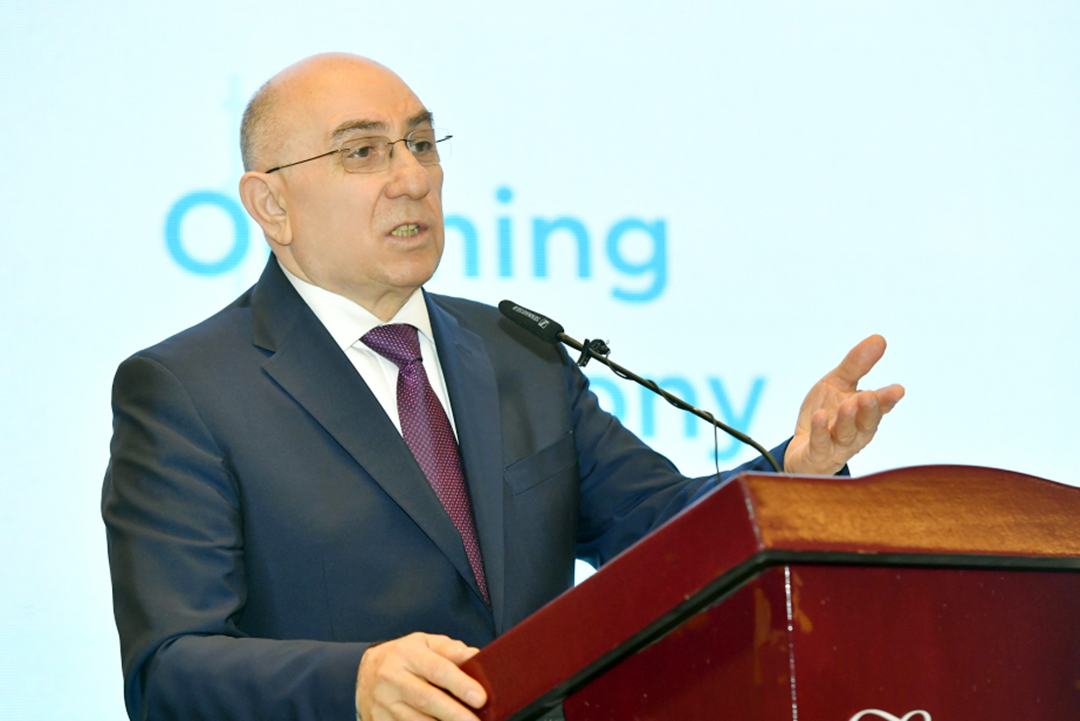
Urban planning requires a comprehensive and multifaceted approach. It comprises not only visible infrastructure such as housing, transportation, ecology, gas, and water supply but also a complex system that incorporates cultural and other socio-economic components. In this regard, urban planning challenges are multidisciplinary in nature and require the collaborative involvement of all scientific disciplines.
AZERTAC reports that these views were expressed by Academician Rasim Alguliyev, Vice-President of the Azerbaijan National Academy of Sciences and Director General of the Institute of Information Technology, during an international conference themed "Developing Human Capital for Sustainable and Resilient Urban Development." The event was held as part of "Baku Urban Week," jointly organized by Baku State University (BSU) and the State Committee for City Building and Architecture.
He noted that although the concepts of green and digital transformation were not widely recognized until recent years, they have now become vital areas of research and development: “Concepts such as green society, green economy, and green technology are now widely used and advanced within the scientific community. Modern urban planning processes are impossible without digitalization and the application of artificial intelligence technologies. The ‘Smart City’ concept has been set as a strategic goal by President Ilham Aliyev, and significant work is underway in this direction. However, this process cannot be achieved solely through the implementation of foreign technologies; it requires the development of national human resource capacity.”
Rasim Alguliyev noted that universities and research institutions play a crucial role in this field: “The consistent efforts of the Ministry of Science and Education are strengthening personnel training in this direction.” The work carried out in the field of urban planning requires a more systematic and institutional approach. To achieve this, the establishment of research institutes and specialized bodies could also be considered. Alongside the positive aspects of digital transformation, there are certain risks involved, and it is vital to be prepared for these challenges. In particular, the emerging risks posed by technologies such as 'deepfake' must remain a focal point.”
The academician emphasized that urban planning in the 21st century, unlike the traditional approach, requires a more innovative and integrated model: “The primary objective of urban planning policy is to ensure development based on modern technologies while preserving historical heritage. Azerbaijan's rich architectural and urban planning heritage holds special significance in this regard and must be developed harmoniously with modern approaches.”