A
A
A
San serif
Serif

Global digitalization and the rapid advancement of artificial intelligence technologies have brought about fundamental transformations in the education system, particularly within distance learning models. The modern labor market’s demand for professionals equipped with technological and analytical competencies necessitates the integration of AI-driven instructional mechanisms. In this context, artificial intelligence in distance education serves not merely as a technological tool but as a key strategic factor in fostering personalized and adaptive learning environments.
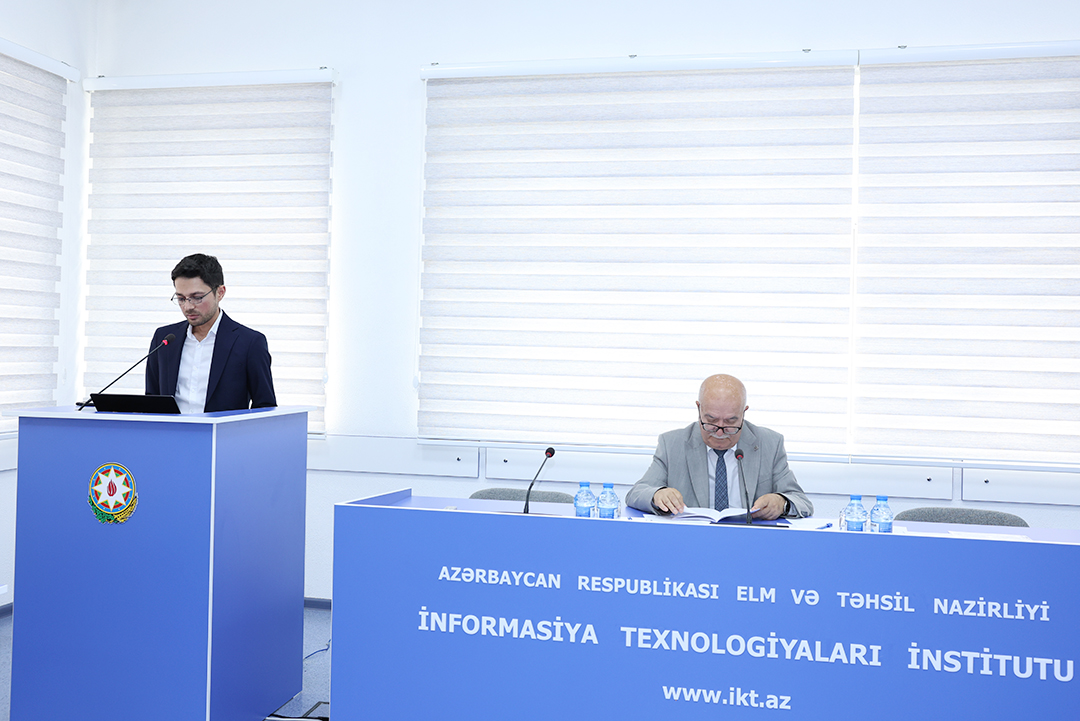
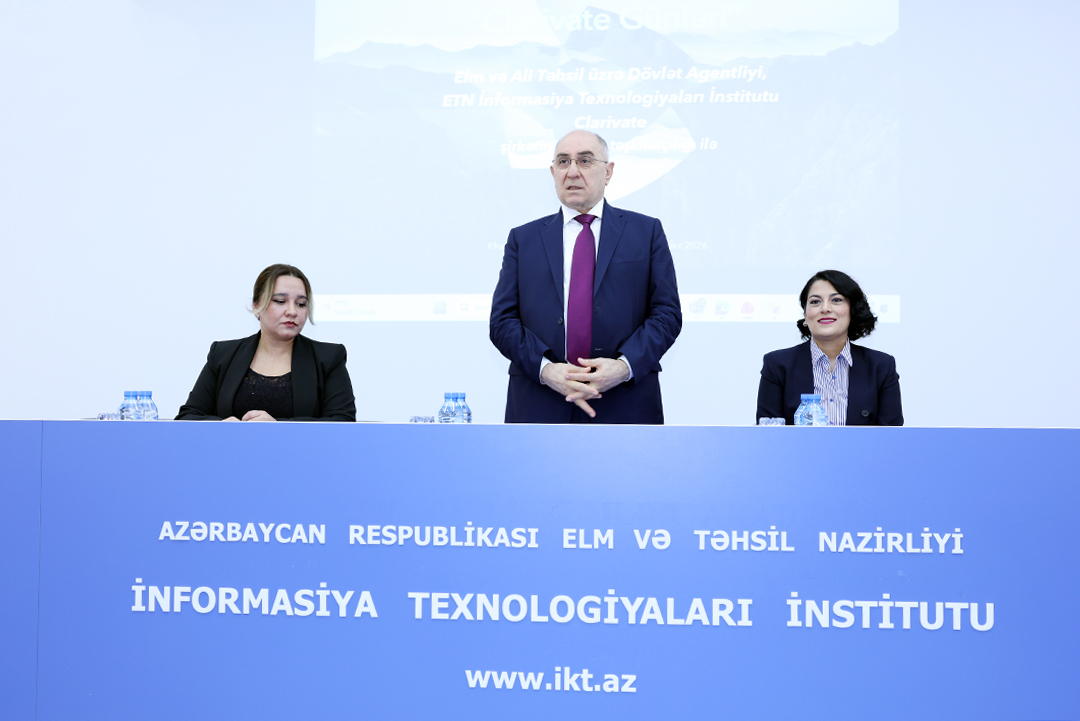
The next scientific seminar dedicated to the topic “The Evolution of Distance Learning Systems through the Application of AI Technologies: Mechanisms of Integration with Traditional Teaching Models, Challenges, and Current Trends” was held at the Institute of Information Technology of the Ministry of Science and Education (MSE). During the meeting, Academician Rasim Alguliyev, the Vice-President of the Azerbaijan National Academy of Sciences (ANAS) and Director General of the Institute of Information Technology of the MSE, delivered a speech emphasizing that the study of the scientific and theoretical problems of distance education is one of the institute’s main areas of activity. He noted that a specialized structural unit operating within the Institute focuses on this field and stated that the comprehensive study of distance education issues is among the matters of strategic importance at the national level.
Academician Rasim Alguliyev emphasized that the seminar’s topic is of particular relevance against the backdrop of the revolutionary technological changes occurring worldwide, the digital transformation processes being implemented in the country, and the reforms being carried out in the field of science. He further noted that the scientific seminar would discuss the essence of distance education, its main development trends, the driving forces behind distance learning technologies, the calls of international organizations in this field, as well as the scientific and theoretical issues related to the application of AI technologies in distance learning.
Subsequently, Associate Professor Firudin Agayev, Head of Department at the Institute and PhD in Technology, delivered a presentation containing comprehensive information about the evolution of distance learning systems through the application of AI technologies, their integration with traditional teaching models, existing challenges, and current trends. He highlighted that adaptive AI systems analyze students’ individual knowledge levels, learning pace, and abilities to tailor instructional content accordingly, significantly enhancing the effectiveness of distance education. Furthermore, the integration of AI into assessment and monitoring processes promotes greater objectivity and optimizes the use of educational resources.
He presented a comparative analysis of distance and traditional teaching models, noting that traditional education is primarily teacher-centered and relies on physical presence and collective experience, whereas AI-based distance education is student-centered, individualized, and adaptive. The speaker emphasized, “Applying the same methods and pace to all students reduces the motivation of fast learners and causes slower learners to fall behind. In this regard, personalized approaches are regarded as one of the principal advantages of distance education.”
According to the presenter, the application of artificial intelligence in distance education is accompanied by a number of scientific and practical challenges. These include the insufficient scientific justification for integrating AI technologies with classical pedagogical principles, the inability of adaptive systems to fully model all individual characteristics of learners, the incomplete assurance of objectivity and reliability in automated assessment, and other related issues.
Associate Professor Firudin Agayev stated that in modern distance education, such challenges are addressed through AI-based adaptive learning systems, individualized learning plans, formative and automated assessment mechanisms, interactive assignments, and similar tools. “Intelligent” educational systems plan the learning process, conduct assessments, and provide teachers with timely feedback through artificial intelligence and data analytics. This, in turn, accelerates the transformation of the teacher’s role from a mere knowledge transmitter to that of a mentor.
The researcher stated that within the framework of modern trends, the concept of Education 5.0 holds particular significance for the development of distance learning. He added that Education 5.0, through artificial intelligence, transforms distance education into not only a digital but also a human-centered, adaptive, social, and sustainable learning ecosystem.
“As a result, the application of artificial intelligence transforms distance education into a more effective, flexible, and personalized learning model and facilitates its integration with traditional teaching forms based on hybrid approaches,” emphasized Associate Professor Firudin Agayev.
Following the presentation, discussions were held, and questions were addressed.
Subsequently, Academician Rasim Alguliyev delivered a speech, presenting his suggestions and recommendations on the topic. He discussed the stages of the evolution of education and noted that the primary driving force of education is related to the communication factor. He explained that the first function of education is the transmission of advanced knowledge, that is, the organization of the communication process, while the second function is the sharing of that knowledge. The development of distance learning is closely correlated with the pace of advancement in communication technologies.
Speaking about the historical development of the educational process, the Director General of the Institute noted that in its early stages, education was informal and individualized, taking place through the transmission of knowledge from one person to another. Over time, formal education models evolved, educational institutions were established, and at a later stage, instruction began to be organized in a distance format through postal correspondence and other means.
Academician Rasim Alguliyev emphasized that for a long period, the transmission of knowledge was carried out primarily through books and textbooks in textual format. However, against the backdrop of the new realities shaped by AI technologies, the function of these traditional knowledge carriers is gradually being transferred to the digital environment, particularly to Internet platforms, and enriched with visual content. The capabilities of generative AI systems to convert text into images, videos, and other formats make the learning process more interactive and bring it closer to a natural communication environment.
The Vice-President of ANAS noted that the concept of inclusivity encompasses not only physical limitations but also language barriers, psychological characteristics, and individual cognitive abilities. The scholar emphasized that linguistic inclusivity is of particular importance in the modern era, stating that the rapid development of artificial intelligence technologies is beginning to play a significant role in ensuring the preservation of the languages of the world’s peoples within the digital environment.
According to the scholar, in modern distance learning systems, the labor market is continuously analyzed, and instructional content is purposefully generated in line with its requirements. At the same time, the content of instruction is adapted to learners’ knowledge levels and individual potential through AI-based tools. The development of automatic translation and speech processing technologies minimizes the risk of extinction for languages with limited resources, providing concrete technological opportunities for their preservation.
The Director General of the Institute also addressed the global challenges in the field of distance education. He stated that a thorough study of the scientific and theoretical foundations of this field, as well as of “intelligent” distance learning models, is extremely important. To achieve this, it is essential to systematically examine articles published in international scientific databases such as Web of Science and Scopus, materials from international conferences, the activities of leading research centers, established standards, cybersecurity threats targeting the learning environment, and relevant software tools.
At the end of the seminar, Academician Rasim Alguliyev recommended that research on the development of distance education, one of the Institute’s current scientific priorities, should be further expanded. He emphasized the particular importance of publishing articles in reputable journals indexed in international scientific databases, organizing educational events to raise public awareness about the challenges of distance education, and conducting master classes at higher education institutions.
© All rights reserved. Citing www.iсt.az is necessary when using news.