A
A
A
San serif
Serif
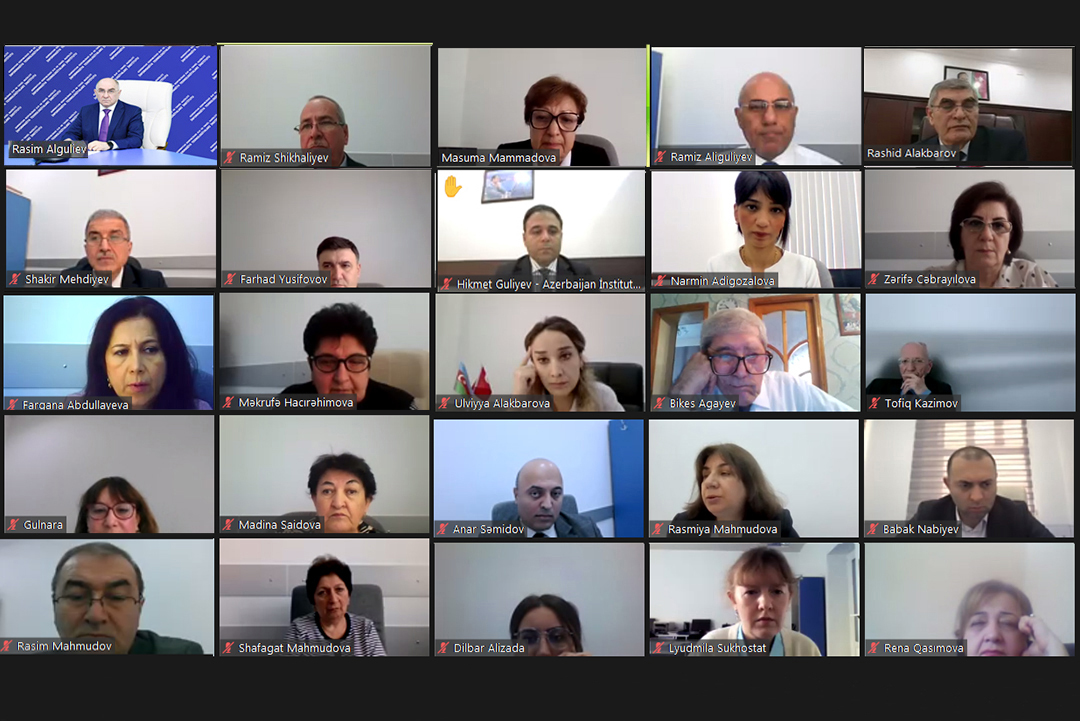
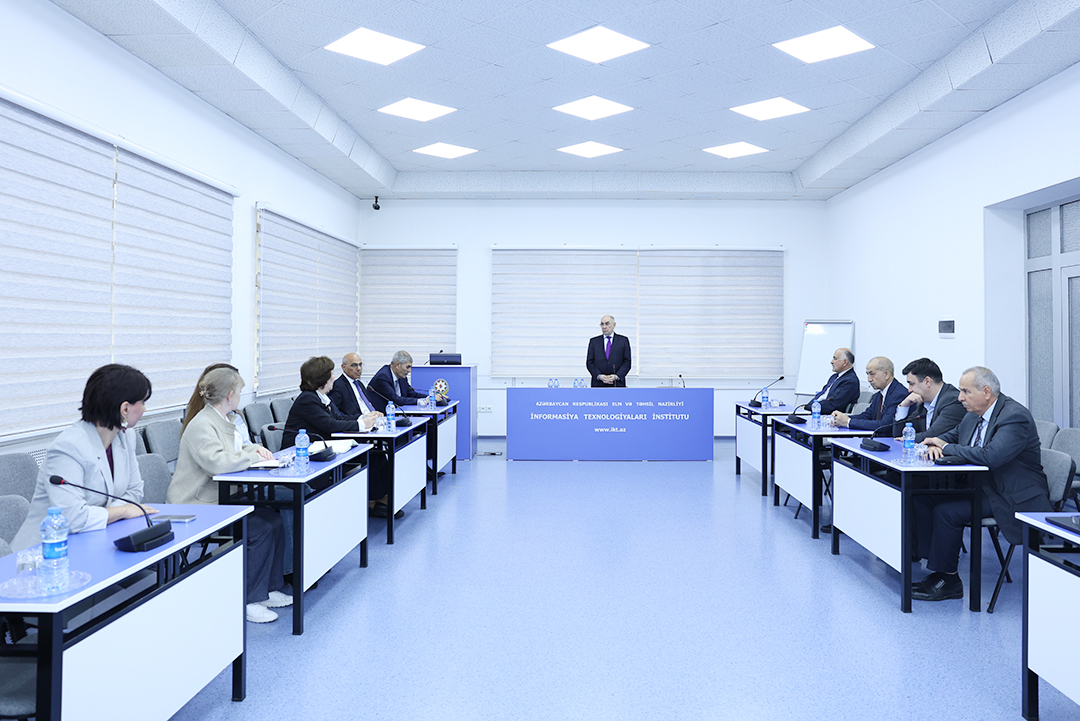
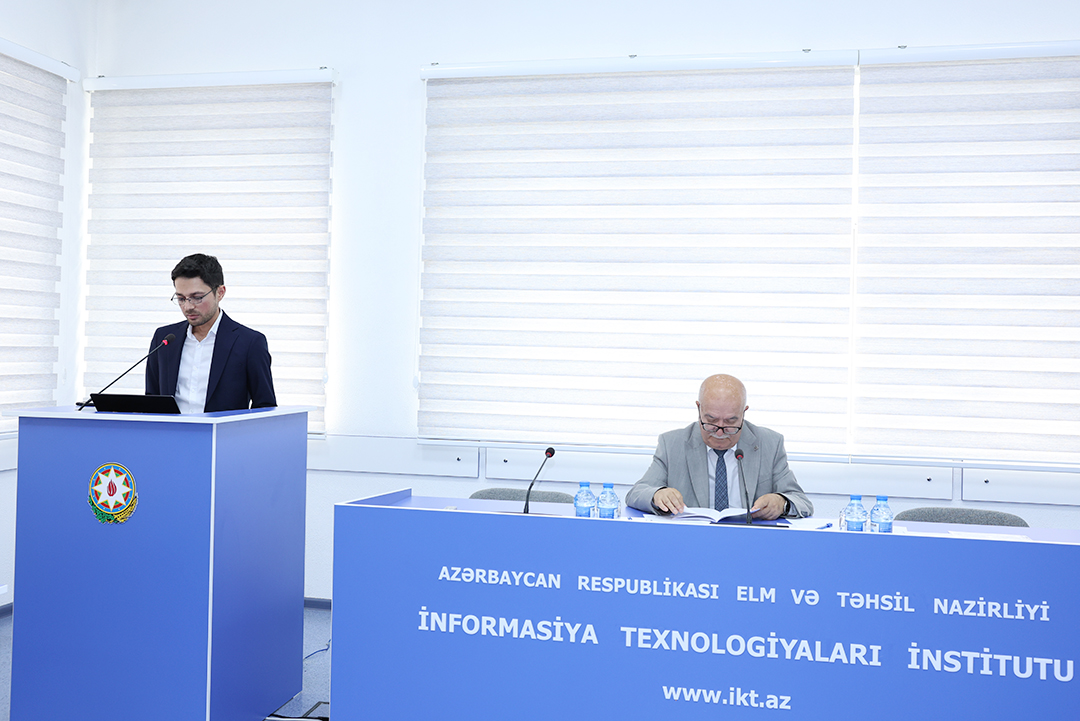
At a meeting of the Scientific Council held at the Institute of Information Technology of the Ministry of Science and Education, Associate Professor Ramiz Shikhaliyev, Chief Researcher of the Institute, presented the 2025 report of the department conducting scientific research on the study and development of the scientific and theoretical foundations of modern information technologies.
R. Shikhaliyev noted that in 2025, the department carried out research on a wide range of areas, including intelligent monitoring of computer networks; ensuring the cybersecurity of cloud systems; enhancing the cyber resilience of cyber-physical systems; intelligent analysis of computer incidents in the Internet environment; improving the efficiency of information retrieval on the Internet; detection of malicious software; ensuring the cybersecurity of unmanned aerial vehicles; protection of personal data in socially oriented cyber-physical systems; ensuring the cybersecurity of critical technological systems; detection of cyber threats in textual data; as well as the development of cyber-forensic methods and algorithms for the detection and analysis of cybersecurity incidents.
The speaker first spoke about the research conducted on the topic of "Development of models and methods for intelligent monitoring of computer networks." He noted that research was carried out on the development of a model for monitoring the cybersecurity of computer networks based on artificial immune systems (AIS), as well as on improving the effectiveness of computer network cybersecurity monitoring through intelligent decision-making approaches.
R. Shikhaliyev noted the research conducted on the topics “Development of Intelligent Methods and Algorithms for Ensuring the Cybersecurity of Cloud Systems” and “Development of Methods and Algorithms for Ensuring the Cyber Resilience of Cyber-Physical Systems” and discussed the scientific and theoretical results obtained. He also drew attention to the scientific and theoretical results obtained in the areas of intelligent analysis of computer incidents in the Internet environment; improving the efficiency of information retrieval; detection of malicious software; ensuring the cybersecurity of unmanned aerial vehicles; securing critical technological systems; protecting personal data in socially oriented cyber-physical systems; detection of cyber threats in textual data; and the development of cyber-forensic methods and algorithms for the detection and analysis of cybersecurity incidents. He noted that the results obtained from the conducted research have been submitted to reputable scientific journals.
R. Shikhaliyev reported that in 2025, 24 articles were published in journals indexed by Web of Science, Scopus, and other international scientific databases, as well as in international and national publications recommended by the Higher Attestation Commission, and 20 theses were presented at international and national conferences.
Speaking about activities carried out in the field of international cooperation, the speaker noted that in 2025, collaboration was implemented within the framework of the GÉANT Association, the EaPConnect project under the EU-funded EU4Digital Programme, and the Horizon Europe Research and Innovation Programme, as well as the TNC25 Conference (TERENA Networking Conference) held in Brighton, United Kingdom. He also highlighted that efforts were undertaken to further develop international scientific cooperation with Poland’s National Centre for Nuclear Research; Ss. Cyril and Methodius University in Skopje; FAST National University of Computer and Emerging Sciences (NUCES) in Pakistan; the College of Health Sciences and Pharmacy at Chicago State University in the United States; and the Hong Kong CORE Academy.
He also provided information on the employees’ scientific-practical and innovative activities, scientific expertise, scientific-organizational and scientific-pedagogical work, participation in grants funded by the Azerbaijan Science Foundation and the Science Fund of the State Oil Company of Azerbaijan (SOCAR), and personnel training, as well as efforts to promote and popularize science.
Then, Academician Rasim Alguliyev, Vice-President of ANAS, Director General of the Institute, and Head of the Department, shared his views on the report. He emphasized that the research conducted in the department addresses contemporary scientific challenges and is highly relevant both theoretically and practically. He also noted that the department has identified the study of fundamental scientific and theoretical problems in cybersecurity—a state-level priority area—as one of its main fields of activity.
Academician Rasim Alguliyev emphasized the importance of further strengthening the scientific activities of young researchers and offered recommendations on publishing the results of their research in reputable scientific journals. He noted that the regular scientific seminars held in the department play an important role in shaping the scientific outlook of young researchers and in accurately defining their research directions. The scientist also highlighted the significance of conducting a deeper analysis of the department’s research in the context of existing studies at the international scientific level.
In conclusion, the Scientific Council decided that the department’s report was satisfactory.
© All rights reserved. Citing www.iсt.az is necessary when using news.