A
A
A
San serif
Serif
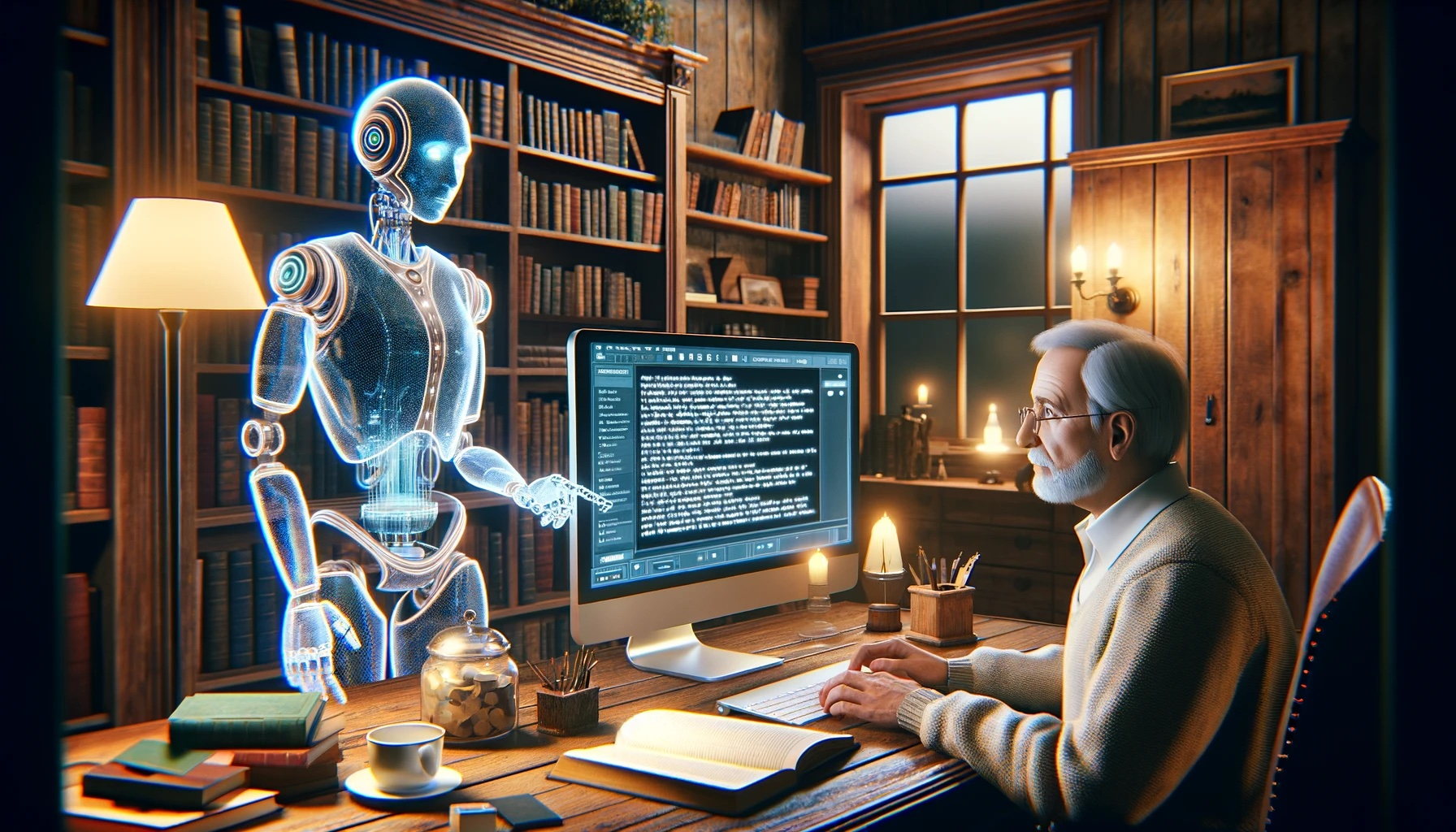
The rapid development of capabilities of Artificial Intelligence (AI) in text generation is raising new questions across the media, publishing, and academic sectors. In particular, questions about how AI-generated texts differ from human-written texts, whether such texts should be considered plagiarism, and who should bear authorship responsibility are becoming increasingly relevant.
But is it possible to distinguish AI-generated texts from human-written ones based on style or other characteristics, and who bears responsibility for such content?
Publishing experience shows that AI translations often cause logical inconsistencies and sentence errors.
Nargiz Jabbarli, the general director of a well-known publishing house and a Doctor of Philosophy in Philology, stated that they rarely receive texts with unknown authors or new bylines: “In such cases, I immediately record the author in my notebook and have the text examined.” In our experience, there was a case in which an AI-generated translation was submitted. It was clear at first glance that it was not the work of a human. According to the experience, sentence structure, and writing style, it was clearly noticeable. In general, AI translations often cause logical inconsistencies and sentence errors. There are also parts of the translation that do not align with the content. “We discovered these as well,” she added.
She noted that plagiarism occurs more frequently in the scientific field: “In our field, it has not been encountered yet. For example, in music or animation, there are sometimes examples created using AI. As soon as you look at them, it is clear that they were not created by a human. Because there are issues with style and technique, an expert can recognize it immediately. An ordinary reader or student might not notice, but a professional can instantly tell that it is the AI product, not the work of a human.”
"AI builds language not by 'thinking' like a human, but based on statistical and semantic correlations"
Academician Rasim Alguliyev, Vice-President of ANAS and Director of the Institute of Information Technology, stated in an interview with the “Azerbaijani Teacher” newspaper that today, “artificial intelligence” primarily refers to large language models and deep learning technologies. These systems are built on transformer technology and learn by analyzing the vast amounts of text available on the Internet: "AI builds language not by 'thinking' like a human, but based on statistical and semantic correlations.
AI follows the internal rules of language when generating text, but it does not possess the personal experience, individual memory, or unique style that underlie human language. In human-written text, the author’s identity—including their profession, knowledge base, worldview, choice of terminology, sentence structure, and style of expression—is clearly reflected in the text. For example, the writing styles of a mathematician, physicist, journalist, or writer differ from one another. Human writing is characterized by a high degree of individuality: the author’s choice of words, use of metaphors, control of emotion, and approach to the subject clearly reveal their identity. By contrast, AI typically uses generalized and neutral language."
The scientist noted that human-written texts sometimes contain dialectal features, cultural context, local expressions, and language-specific nuances. AI, however, often fails to distinguish such features correctly or applies them in an inappropriate context. These may also serve as a signal to the reader.
Methods to spot AI-generated text
The academician emphasized that there are several ways to detect AI-generated texts: "The first method is to identify the author. If the author is already known, the newly presented text is compared with their previous writings, style, and level of knowledge. Any discrepancies may raise suspicion. The second method is testing. The author is asked specific questions based on the text. If the person cannot adequately explain the text, it may indicate that they did not write it.
The third method is computer analysis. The author’s previous writings are uploaded into the system, their linguistic features (such as terminology and sentence structure) are extracted, and they are compared with the AI-generated text. If these features do not match, potential plagiarism may be indicated.
In general, AI-generated texts are not entirely undetectable. In professional settings, including academia and the media, the origin of a text can often be reliably determined through style analysis, testing, and technical comparison. These also underscore the importance of using artificial intelligence within a transparent and ethical framework.”
The academician noted that detecting AI-generated texts is no longer merely theoretical, and modern anti-plagiarism programs are now widely used for this purpose: "These tools analyze not only whether a text has been copied from another source, but also whether it was written by a human or generated by AI. The programs determine the origin of a text by analyzing the statistical structure of the language, sentence syntax, word usage patterns, and semantic coherence.
This topic is already being discussed internationally and is being examined by the World Intellectual Property Organization (WIPO). By the way, a conference on this topic, titled “Intellectual Property and Artificial Intelligence,” was recently held in Azerbaijan. I also attended the event, and these issues were discussed extensively there.
The main point about AI is that no program creates a product on its own—there is always a human behind it. The human poses the question, and the AI generates the response. If you asked the question, then you played a role in creating that product."
“The primary responsibility for AI-generated texts rests with the person who creates, manages, and uses them”
The Vice President of ANAS also stated that generative AI is not an independent entity and does not make decisions or create texts on its own. AI generates results only based on the tasks, questions, and instructions provided by a human: Therefore, under the current approach, primary responsibility for texts generated by artificial intelligence remains with the individual who develops, manages, and uses it. Although legal mechanisms have not yet been fully established, the internationally accepted position is that a machine is not considered an author. In the future, digital traces and technical identifiers are expected to be added to AI-written texts to address this problem. This will make it possible to identify which text was created by which system, on what date, and under what conditions. Such mechanisms could play an important role for the media, academic institutions, and legal processes.
© All rights reserved. Citing www.iсt.az is necessary when using news.