A
A
A
San serif
Serif

In our contemporary era, as in all areas of life, the use of modern technologies and artificial intelligence (AI) has also become widespread in the field of art. The application of AI to the theater stage not only enhances creative potential but also creates a dynamic connection between the audience and the theatre. Today, leading theatre centers around the world make extensive use of artificial intelligence’s “capabilities” in analyzing acting performance, designing stage, and creating visual effects.
In particular, directors who once faced numerous challenges due to limited technical capabilities are now creating more refined, audience-acclaimed, and unforgettable screen productions with the help of AI. These innovations enrich the art of theatre even further without altering its essence, breaking tradition, or disregarding its classical rules. A theatre that reflects contemporary realities and features interactive content meets the demands of the time by harmonizing tradition with modernity.
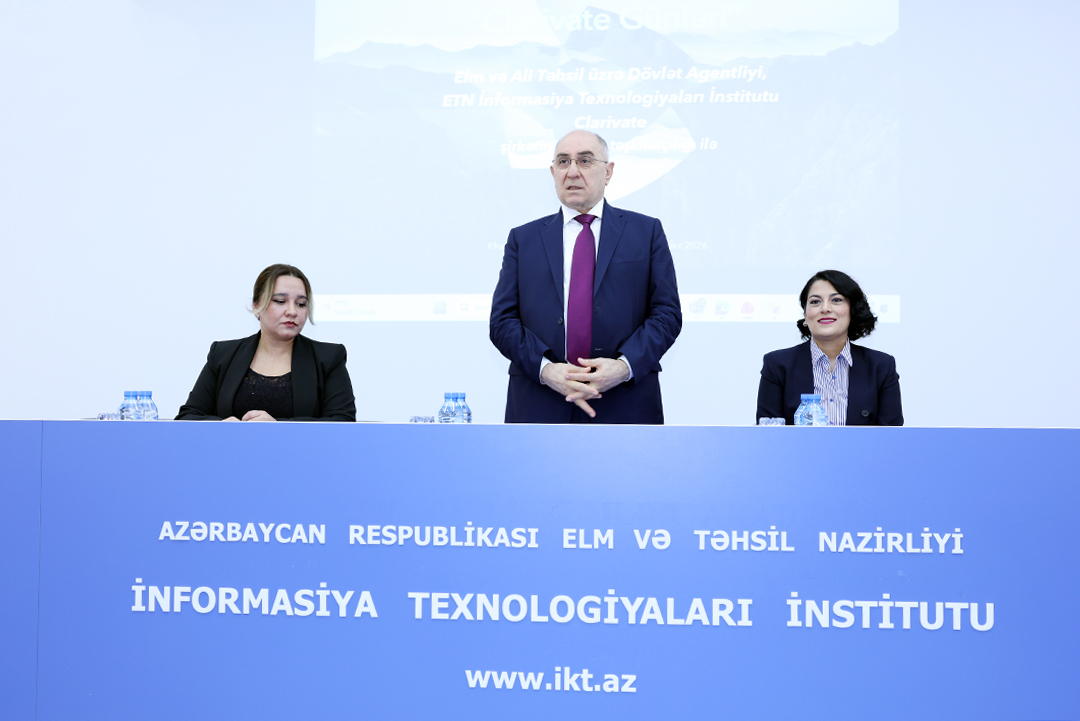
Afruz Gurbanova, a senior researcher at the Institute of Information Technology of the Ministry of Science and Education of the Republic of Azerbaijan and a PhD in Technical Sciences, was interviewed by "Khalg Gazeti." During the interview, the scholar answered questions about the possibilities of applying digital technologies and AI in the theatre arts.
– In recent years, the scope of applying and using new technologies has been expanding in various fields of culture and the arts, including the performing arts. How does this trend influence the development of theatre?
– Throughout history, the art of theatre has constantly evolved by drawing on the achievements of scientific and technological progress. Even the ancient Greeks used the technologies of their time—such as a wheeled platform that emerged from the center of the stage—to enhance artistic experimentation and create memorable performances in their theatres. In the 19th century, carbon arc lamps were a breakthrough in theatre, introducing a new method of stage lighting. It allowed actors and stage decorations to be seen more clearly, making the performances more appealing.
Contemporary art of theatre has reached a new stage, influenced by AI and innovative digital technologies. Starting from the late twentieth and early twenty-first centuries, modern technologies have begun to permeate every aspect of theatre production—from the creation of stage images to interaction with audiences. In contemporary theatre productions, modern technologies—including advanced lighting systems, sound amplification, and 3D printing for stage design—are being used. These innovations expand the creative potential of set and costume designers, enabling the creation of complex, dynamic environments that were once impossible or difficult to achieve.
AI technologies are significantly transforming the theatre experience by bringing innovations that enhance both professional standards and the overall appeal of performances. On the theatre stage, the use of AI creates new opportunities for interactive engagement between the audience and the virtual world, made possible by natural language processing and speech recognition technologies. The integration of AI into theatre performances through machine learning and emotion recognition makes it possible to flexibly create and personalize theatrical scenes. AI can support theatre directors in script analysis, stage design, lighting, and sound design. In short, AI brings a fresh perspective to the art of traditional theatre.
At the same time, the application of machine learning algorithms makes it possible to analyze data from previous performances and identify the most successful moments. Based on the results, directors can predict which scenes and dialogue will be more effective before the premiere and make changes accordingly. Modern technologies play a crucial role in the creation of stage costumes and set designs.
As is well known, during the COVID-19 pandemic, strict regulations concerning social restrictions and the closure of public spaces posed significant challenges for the art of theatre. These restrictions on holding mass events prompted creative individuals to explore new forms of expression. One of these means is precisely AI. Theatres engaged in online interaction with audiences through digital platforms.
It is expected that technological development will lead to the creation of sensor-equipped “smart’” costumes. Such costumes will be able to change color and control lighting and sound effects in response to the actor’s movements or the musical accompaniment.
– What innovations do AI-generated voice effects and imitations bring to the stage?
– One of the key innovations that has amplified the impact of technological progress on the theatre industry is voice imitation. Voice imitation and AI technologies are opening new possibilities in voice acting and the enhancement of actor performance in theatre. Innovations such as AI-generated sound effects, the reconstruction of human voices, and even the revival of the voices of late artists on the stage are giving new life to the art of theatre. AI-powered voice imitation can also be used for simultaneous interpretation. This enables actors’ voices to be translated into different languages during international tours, giving audiences the opportunity to listen in their own native language. AI is producing virtual performances that can interact with live actors on stage. An entirely new character is brought to life through 3D models of the actor’s facial and body expressions. Virtual actors also voice the performances of actors who are no longer alive.
– How original are the works created by AI, and how is their authorship determined?
– The use of AI in the arts gives rise to a number of legal, ethical, and creative challenges. The question of who owns the legal rights to works created by AI remains a subject of global debate in terms of authorship, while the issue of their originality continues to provoke significant controversy. Since AI is neither a natural nor a legal entity, the authorship rights to the works it produces are often assigned to the software developers. AI is a tool, and its ability to generate ‘original’ works depends on how we choose to use it.
AI, lacking human experience and emotion, cannot truly create original works of art, since its creativity relies on processing and combining existing representations. The use of AI in theatre does not mean the complete loss of the human element. On the contrary, it creates new opportunities for creative collaboration between humans and machines.
– What is the concept of “immersive theatre” that has emerged in recent years, and what advantages does it have?
– Yes, in recent years, “immersive theatre,” as a new direction in contemporary art, has been making extensive use of the possibilities offered by digital technologies. “Immersive theatre” is a form of theatre in which the audience is not a passive observer but becomes involved in the events alongside the actors. In this form of theatre, the boundary between the stage and the audience disappears, and the spectator becomes a direct part of the storyline. In other words, new technologies such as virtual and augmented reality, projection screens, and video displays are used in theatre spaces to realize various ideas, which helps create a sense of presence and enhance the emotional impact.
The development of virtual and augmented reality technologies provides the basis for the new “immersive theatre,” which is capable of removing the distance between actors and the audience and placing them together within a single shared space.
– What unique opportunities do virtual reality technologies create in the theatre?
– One of the most striking trends in the application of new technologies in theatre is virtual reality. Virtual reality technology emerged in the 1960s and began to gain popularity in the early 1990s. The development of technologies such as holography, immersive displays, haptic technology, 3D sound, and electronic sensors is driving the creation of complex and interactive artistic spaces.
Virtual reality technologies help create spectacular scenes that cannot be produced on a traditional stage. As a result, audiences become immersed in a fantastical world that ranges from outer space to the depths of the ocean. It opens the doors of the theatrical world to audiences anywhere in the world and expands the boundaries of theatrical art.
People with disabilities, those unable to attend theatres, and individuals with limited mobility can experience theatrical performances in a virtual environment. With the development of AI, digital characters are beginning to appear on theatre stages alongside real actors. In fact, in some performances, characters that are entirely controlled by AI appear on stage. This expands the expressive possibilities of theatre and also creates a basis for new experimental approaches.
Virtual reality technologies—including VR headsets, glasses, controllers, motion sensors, and others—create the illusion of presence in a virtual world. In other words, the actor uses various devices such as a headset, glasses, and gloves to immerse themselves in the virtual environment and interact with it.
In 1957, Morton Heilig, regarded as the “father of virtual reality,” created the unique device known as the “Sensorama.” The Sensorama is a space that allows the viewer to watch short films not only visually but also through other senses such as smell and touch. In 1968, American scientists Ivan Sutherland and Bob Spruell made an invaluable contribution to the development of virtual reality by creating the “Sword of Damocles,” a head-mounted display connected to a computer that tracked head movements.
– So what is “augmented reality,” and how does it enrich the art of theatre?
– In the 21st century, augmented reality is regarded as one of the most promising technologies within the Industry 4.0 space. It is a technology that enables computer-generated digital elements such as visuals, sound, and text to be added to the real-world environment in real time. “Augmented reality” enriches the real world in real time with digital elements such as images, videos, 3D models, and data. It creates interactive experiences by placing virtual objects into the user’s physical environment through various devices such as smartphones, tablets, augmented-reality glasses, or specialized displays.
Unlike “virtual reality,” which creates an artificial world, “augmented reality” integrates digital objects into existing reality, opening up new opportunities for the viewer to immerse themselves in the virtual world. In theatre performances, “augmented reality” can be used to create immersive sound effects that enhance the emotional impact on the audience. “Augmented reality” makes theatre accessible to a global audience by providing translation into other languages and opens new creative horizons for directors and designers.
The interview is conducted by Mehpara Aliyeva.